

Our Services → Device Checks
Cardiac Device Checks
Pacemaker, defibrillator and loop recorder checks in Melbourne and Gippsland
After a cardiac device is implanted, regular monitoring is essential to ensure it is functioning perfectly. A/Prof Ben Pang, our expert Cardiac Electrophysiologist, offers comprehensive pacemaker interrogation and device reviews at our clinics in Malvern, Vermont South and Bayside Health in Leongatha.
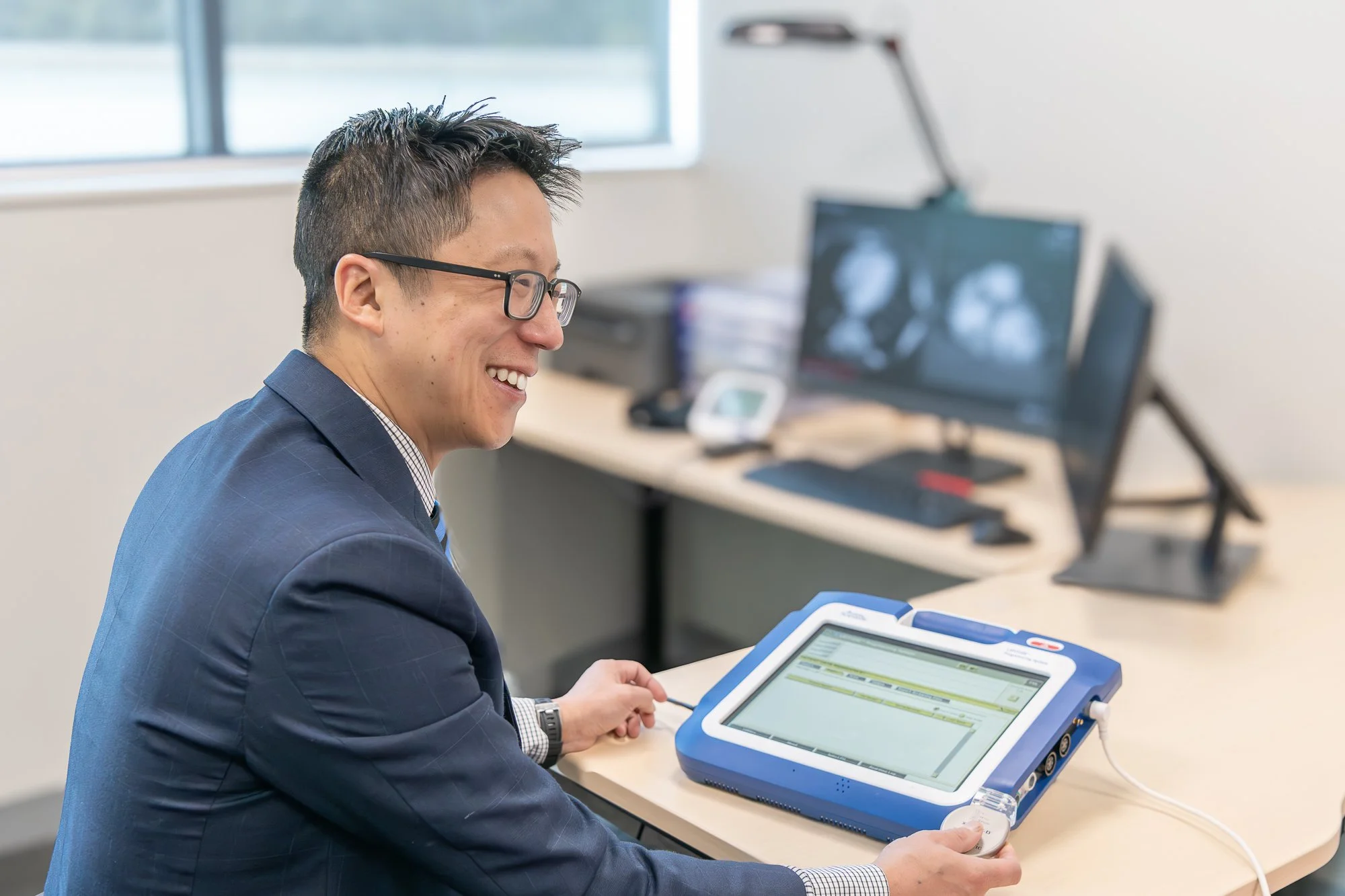
About your cardiac device check
-
A device check is a painless, non-invasive process using a specialised computer called a programmer. By placing a wireless 'wand' over your skin, our specialist team securely communicates with your pacemaker, ICD (Defibrillator), or Loop Recorder. In just 5–10 minutes, we can review your heart’s rhythm, check battery life and fine-tune settings to match your lifestyle.
-
Regular reviews (typically every 6 to 12 months) are vital for maintaining your heart health and device reliability. Common reasons for an appointment include:
Routine Battery & Lead Checks: Tracking battery longevity and verifying the integrity of the wires (leads).
Investigating New Symptoms: If you feel dizzy, breathless, unusually tired, or experience palpitations or fainting.
Post-Implantation Review: A 4–6 week follow-up after surgery to ensure the device is settling correctly.
Device Alerts: Responding to notifications from your home monitoring system.
Peace of Mind: Confirming your device is technically sound if you feel "off" or have health concerns.
-
Your visit with Dr Ben Pang is efficient and typically takes 15–30 minutes:
Wireless Interrogation: We check the device's internal logs, battery and wires using an external wand.
Clinical Consultation: Dr Pang will discuss your recent health history and any symptoms you’ve noticed.
Physical Assessment: A quick check of the implantation site for any signs of irritation.
Remote Monitoring Setup: Depending on your device, we may set up a home monitoring system for secure checks via the internet.
-
Bring Your Device ID Card: Carry your ID card from the manufacturer (e.g., Medtronic, Boston Scientific, Abbott/St. Jude, or Biotronik) so we can instantly identify your model.
Clothing: Wear a comfortable, loose-fitting two-piece outfit (like a button-down shirt) for easy access to the device site.
Referral: Ensure you have a valid GP referral on file to claim your Medicare rebate.
Medication List: Bring an updated list of all medications and dosages.
Symptom Log: Note the date and time of any "shocks," dizzy spells, or palpitations to help us cross-reference with the device’s logs.
-
Ongoing monitoring is about ensuring your heart and device work in perfect harmony. By proactively tracking performance, we can plan for future battery replacements well in advance and identify rhythm abnormalities before they become a problem. Following your check, a detailed report will be sent to your GP to keep your entire medical team informed.
-
Most patients require a check-up every 6 to 12 months. However, your cardiologist may recommend more frequent reviews shortly after implantation or as the battery reaches its elective replacement interval.
-
No. The process is entirely non-invasive and painless. The "programmer" wand simply sits on top of your clothing or skin and communicates with your device via wireless signals. You won't feel any electricity or sensations during the check.
-
The interrogation itself takes only 5 to 10 minutes. Including the consultation with Dr Pang to discuss your symptoms and health history, you should expect to be in the clinic for approximately 20 to 30 minutes.
-
Modern devices provide years of notice before a battery needs replacing. During your regular checks, we monitor the "Voltage" and "Expected Life." When it reaches a certain level, we will proactively schedule a simple procedure to replace the device generator.
-
Yes. Unlike the initial implantation surgery, a routine device check does not involve sedation or physical restrictions. You are safe to drive yourself to the clinic and resume normal activities immediately afterward.
-
In many cases, yes. We can provide a home monitoring console that transmits data from your device to our clinic via the internet. While this doesn't replace all in-person visits, it allows us to monitor your heart rhythm and device health continuously between appointments.
-
If you have an ICD (Defibrillator), the technician will check its functions, but the device is not triggered to deliver a shock during a routine office visit. We simply review the logs to see if it has had to deliver any therapy since your last visit.


Book an appointment with Dr Ben Pang for a cardiac device check
Questions?
call us on 03 9964 4848