

Our Services → Monitoring
Monitoring
Heart rhythm and blood pressure monitoring in Melbourne and Gippsland
Melbourne Cardiology Group offers 24-hour Holter monitoring, 28-day HeartBug cardiac event monitoring and 24-hour ambulatory blood pressure monitoring at selected locations across Melbourne and Gippsland. These portable monitoring devices record your heart rhythm or blood pressure during your usual daily routine, providing information that a standard ECG or single blood pressure reading may not capture.
Learn more about each type of monitoring, including how it works, what to expect and how to prepare.
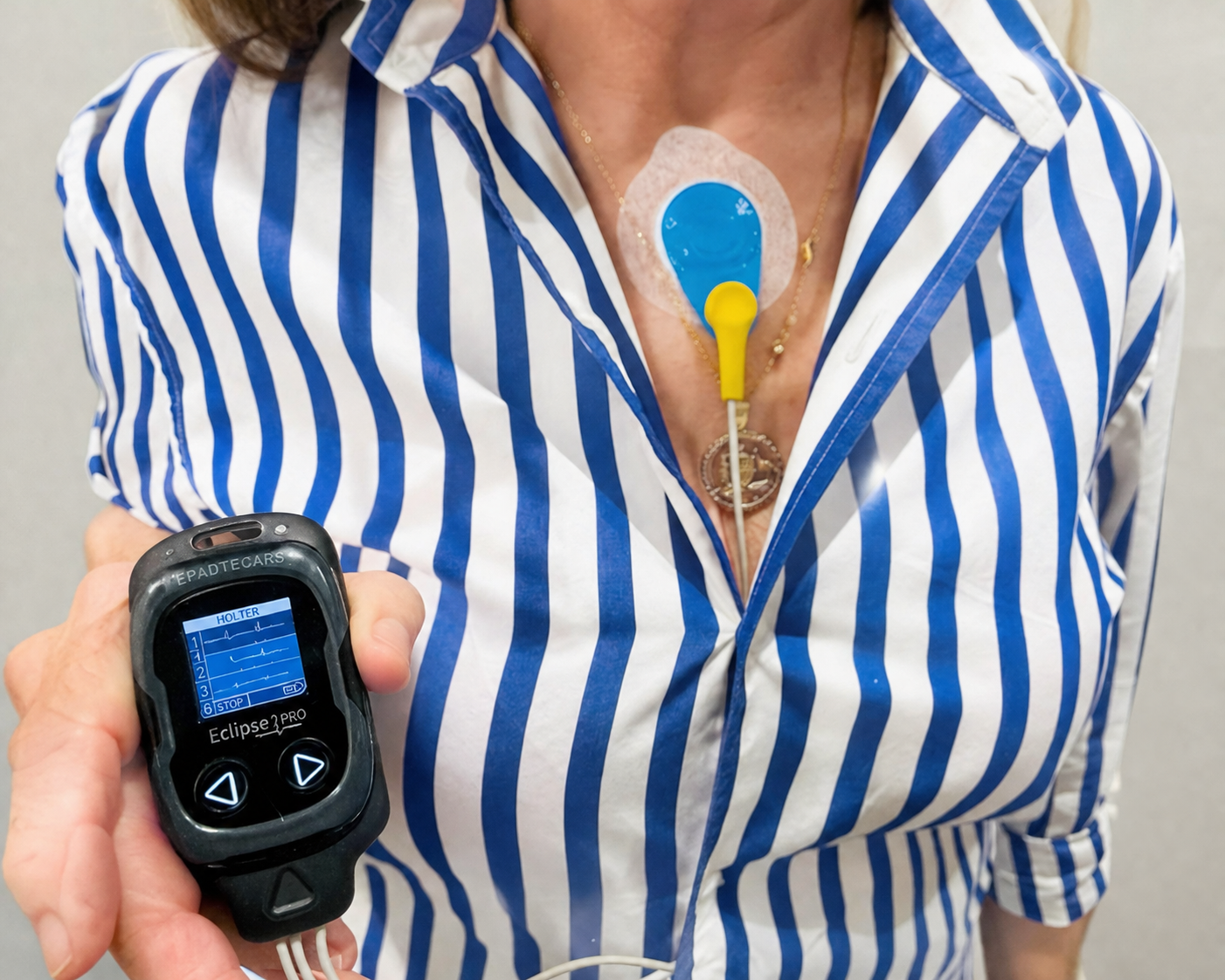
24-Hour Holter Monitor (Heart Rhythm Recording) Melbourne & Gippsland
Melbourne Cardiology Group offers professional 24-hour Holter monitoring at multiple convenient locations across Melbourne Metro and in Leongatha. This portable heart monitor allows us to capture intermittent rhythm abnormalities that a standard ECG might miss.
-
Heart rhythm problems are often the underlying cause of symptoms like palpitations, dizziness, blackouts, or even strokes. These issues are typically caused by:
Bradycardia: Abnormally slow heart rates.
Tachycardia: Abnormally fast heart rates.
Atrial Fibrillation (AF): Irregular heart rhythms.
Since these events often "come and go," a Holter monitor captures your heart's activity during your normal daily routine, providing the data needed for a precise diagnosis.
-
A 24-hour Holter monitor is a portable, lightweight device used to record your heart's electrical activity continuously while you are at home. Small, sticky electrodes are placed on your chest and connected to the recorder. While most tests last 24 hours, your cardiologist may recommend monitoring for up to 7 days (1 week) to ensure enough data is captured.
-
Fitting: A quick 15-minute appointment where our staff fit the electrodes and show you how to wear the monitor.
Daily Activity: You are encouraged to follow your usual routine. Note: You cannot shower or swim while wearing the monitor; the equipment must stay dry.
Logging Symptoms: If you feel a "racing" heart or palpitations, you can log the event by pressing the arrow key on the device.
Analysis: After 24 hours, you return the device to the clinic. Our specialist cardiac physiologists and cardiologists then review every heartbeat to identify irregularities.
-
We understand that cost is an important factor in your healthcare.
Bulk Billing: We offer bulk billing for our 24-hour Holter monitoring services for patients with a valid referral, subject to Medicare (MBS) criteria. This means there is often no out-of-pocket cost for the standard test.
Long-Term Monitoring: If your doctor requires the monitor for longer than 24 hours (e.g., 48 hours or 72 hours), an out-of-pocket fee will apply. Please confirm current fees with our team when booking.
-
No. The device must stay completely dry. We recommend showering immediately before your fitting appointment, as you won't be able to wash your chest area until the monitor is removed.
-
No. We want to see how your heart behaves during your typical day. You can exercise, but please avoid activities that make you excessively sweaty, as this can cause the electrodes to peel off.
-
No. The Holter monitor is entirely passive—it only "listens" to your heart. It does not send electricity into your body and is completely painless.
-
If a sticky pad becomes loose, press it back down firmly. If it falls off, you can use a small piece of medical tape to re-secure it and note the time in your diary.
-
A detailed report, including your ECG trace, is sent to your referring GP or specialist. If the cardiologist identifies an urgent issue, our team will contact your doctor immediately.

Book a 24-hour Holter monitor
Available at locations across Melbourne and Gippsland. Contact your preferred clinic directly to book.

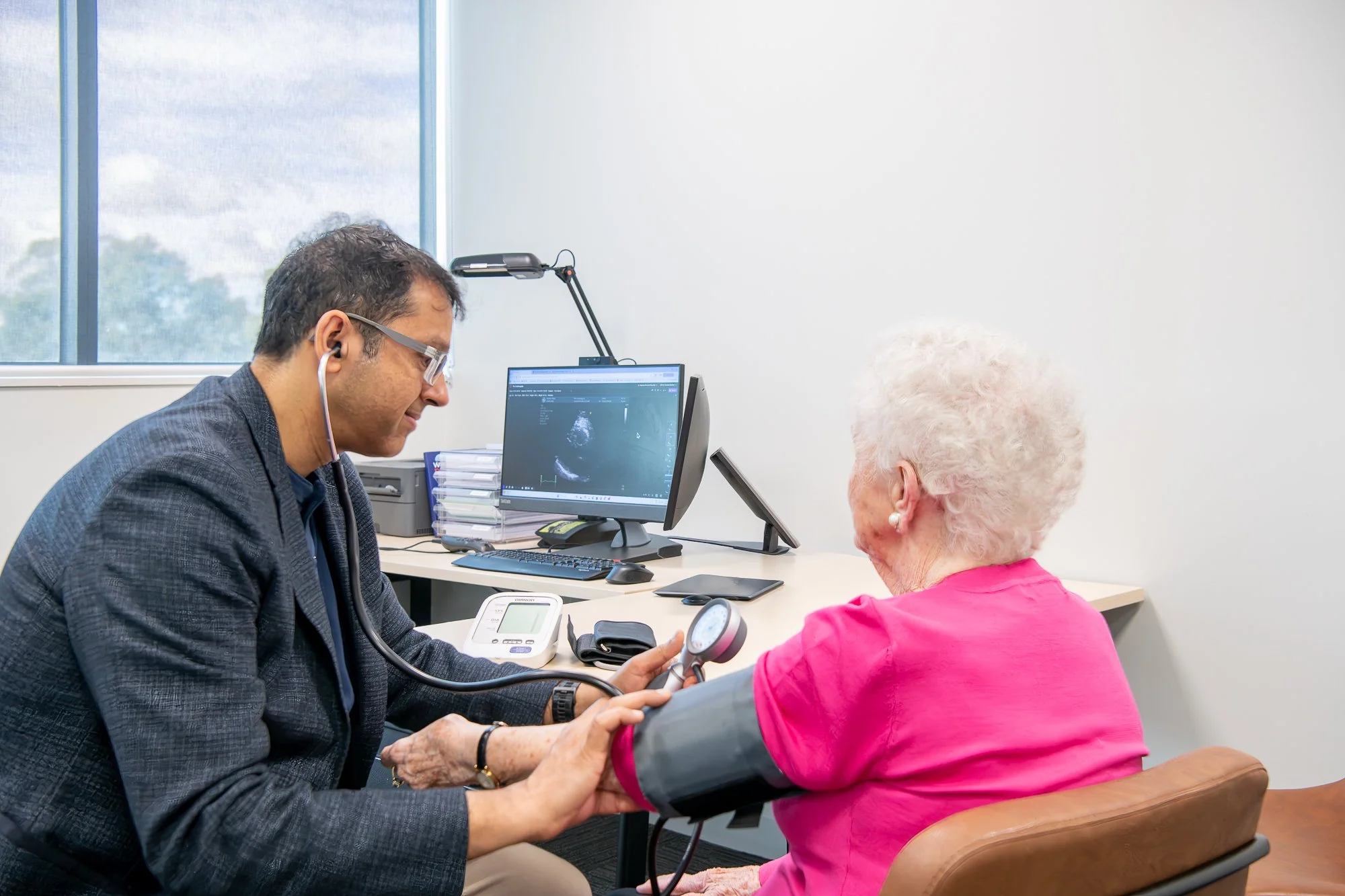
24-hour Blood Pressure monitor
Melbourne Cardiology Group provides 24-hour Ambulatory Blood Pressure Monitoring (ABPM) at our rooms in Malvern, Vermont South, and Leongatha. This essential 24-hour BP test is a diagnostic tool used to measure blood pressure throughout the day and night to accurately assess hypertension, detect "white coat" or "masked" hypertension, and evaluate treatment effectiveness. Patients can continue their usual daily routines, though the device must remain dry, and a detailed report is sent to the referring doctor to guide treatment.
-
While a single blood pressure reading in a clinic provides a "snapshot" of your health, blood pressure naturally fluctuates throughout the day due to activity, stress, and sleep. Ambulatory Blood Pressure Monitoring (ABPM) is considered the "gold standard" for getting a comprehensive 24-hour profile.
Your doctor or cardiologist may recommend a 24-hour Blood Pressure test to:
Identify "White Coat" Hypertension: Many patients experience spiked blood pressure readings only in a medical setting due to anxiety. A 24-hour blood pressure monitor confirms if your pressure is normal when you are at home.
Detect "Masked" Hypertension: Some patients have normal readings in the clinic but dangerously high blood pressure during their daily routine or while asleep.
Investigate Borderline Readings: If your GP has recorded several borderline high readings, ABPM helps determine if a formal diagnosis of hypertension is necessary.
Assess "Nocturnal Dipping": It is healthy for blood pressure to drop (or "dip") while you sleep. A 24-hour BP test is the only way to see if your body is getting this vital rest, as a lack of dipping can increase the risk of stroke or heart disease.
Monitor Treatment Effectiveness: If you are already on blood pressure medication, this monitor shows exactly how well it is working over a full 24-hour cycle, ensuring there are no dangerous gaps in coverage.
Evaluate Symptoms: If you experience dizzy spells or light-headedness, the monitor can help determine if these episodes are linked to sudden drops in blood pressure (hypotension).
-
An Ambulatory Blood Pressure Monitoring (ABPM) device is a portable medical tool used to record your blood pressure at regular intervals over a full 24-hour cycle. Unlike a standard check, this 24-hour blood pressure monitor provides a continuous profile of how your heart responds to the physical and emotional stresses of daily life. The system consists of a cuff worn on your arm connected to a lightweight recording unit, offering vital data on your health that a one-off "snapshot" cannot capture.
-
Where to get a BP monitor: We offer professional fitting for the 24-hour BP test at our Malvern and Vermont South rooms.
Fitting: A staff member will secure the cuff and monitor; this usually takes about 15 minutes.
Automatic Measurements: The cuff will inflate automatically every 30 minutes during the day and switch to every 60 minutes overnight. When you feel it tighten, simply keep your arm relaxed at your side for the most accurate reading.
Daily Activity: To get a realistic ABPM result, you should follow your normal routine. However, you cannot shower or swim while wearing the device.
-
A: There is a fee for our clinical service, which includes the device fitting, professional data analysis, and a cardiologist-reviewed report. If your current referral meets specific MBS criteria, you will receive a Medicare rebate under item number 11607. If your referral does not meet these specific criteria, you will be charged the out-of-pocket fee for the reporting and service. Our staff will confirm your eligibility and any costs during your booking.
-
Yes. To receive a Medicare rebate and ensure the results are correctly integrated into your medical history, a current referral from your GP or specialist is required.
-
It typically inflates every 30 minutes during the day and 60 minutes at night to allow for sleep, ensuring a complete ABPM profile.
-
You can easily book this service at our Malvern or Vermont South clinics. Simply click the Book an Appointment button on our website or call our rooms directly. Please ensure you have a valid referral before booking.
Book a 24-hour blood pressure monitor
Appointments are available at selected locations. Book online or contact our team with your valid referral.
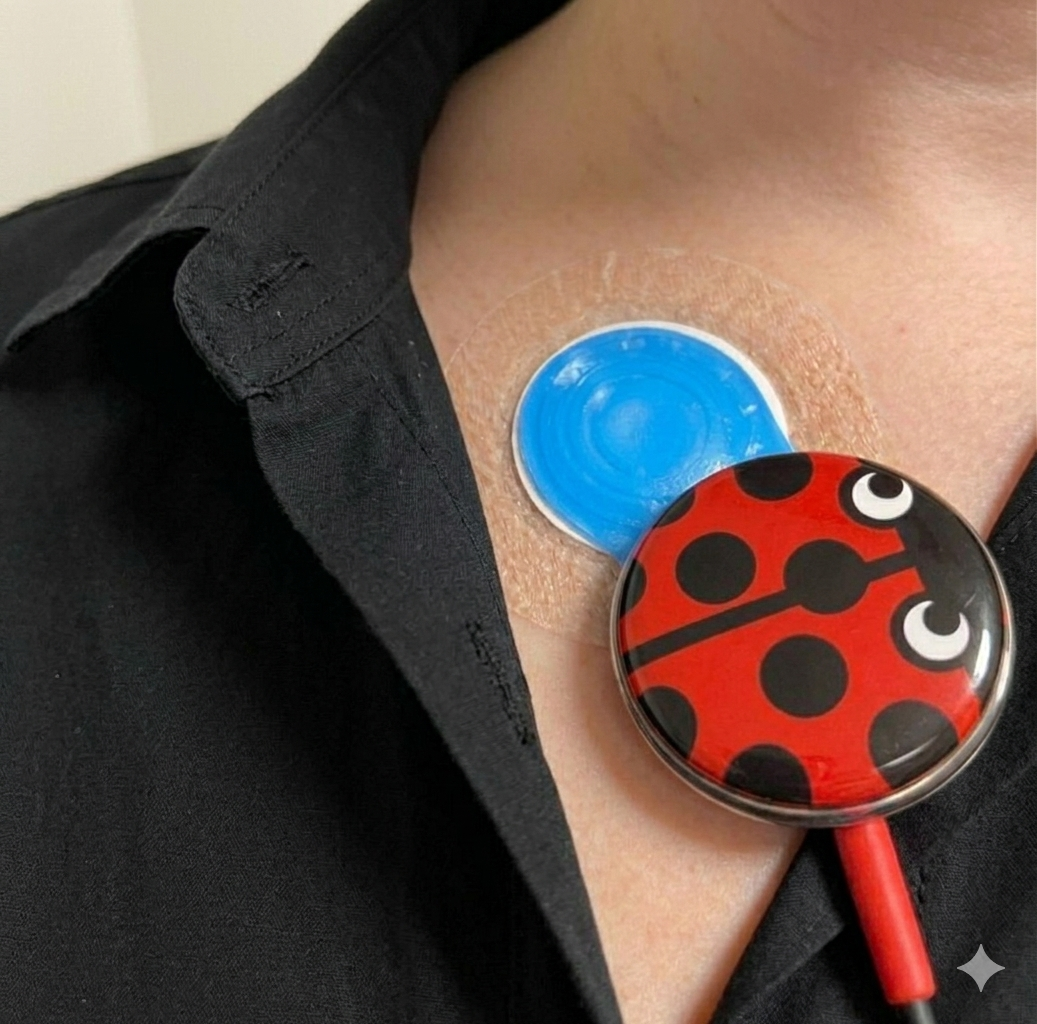
28-day HeartBug: long-term cardiac event monitoring
For heart symptoms that occur infrequently, a standard 24-hour test may not be enough. Melbourne Cardiology Group offers the 28-Day Heartbug, a specialised cardiac event monitor, at our clinics in Malvern, Vermont South and Leongatha. This advanced, portable ECG monitor captures irregular heart rhythms over 1 to 4 weeks, providing a much higher chance of diagnosis.
-
The Heartbug is the gold standard for investigating symptoms that "come and go." Your cardiologist may recommend this cardiac event monitor to:
Capture Infrequent Symptoms: Record palpitations, dizziness, or chest pain that only happens occasionally.
Identify "Silent" Heart Issues: The device watches your heart 24/7 and can automatically record abnormalities you might not feel.
Post-Stroke Monitoring: Screen for intermittent Atrial Fibrillation (AF) over a longer period.
Sleep Monitoring: Automatically track heart activity during sleep.
-
The Heartbug is a discreet, portable ECG monitor worn on your chest and connected via Bluetooth to your smartphone. By using the Heartbug app, your phone becomes a powerful diagnostic tool that "loops" it’s recording to monitor your heart 24/7.
-
Unlike older monitors, Heartbug features Auto-Detect. If it detects a significant cardiac event, it sends an alert directly to your cardiologist for immediate review.
-
Logging an Event: If you feel symptoms, simply tap the “Make a Recording” button. The device cleverly saves the 20 seconds before you pressed the button, so you never miss the start of an event.
“See My Heart”: View your live ECG recordings and check your signal quality at any time.
Automatic Backup: The device records automatically if it detects a serious issue, even if you are asleep or away from your phone.
-
The fitting process at our Melbourne or Gippsland rooms takes about 15–20 minutes:
Registration: Our staff set you up in the Heartbug portal.
App Setup: You will download the app via a secure link sent to your phone.
Fitting: Clinical staff will apply the device and ensure the Bluetooth connection is stable.
-
Once your monitoring period is finished (usually after 28 days), your app will notify you.
Return via Post: Place the Heartbug device and leads into the prepaid envelope provided and post it back to Heartbug.
Skin Care: Use the provided oil-based wipe to remove patches. Pro Tip: Olive oil or coconut oil works perfectly to remove stubborn adhesive residue.
Results: A detailed report will be sent to your referring doctor to discuss at your follow-up appointment.
-
A fee applies for the device and specialist reporting. Our staff will confirm your out-of-pocket costs at the time of booking.
-
Heartbug offers specialized hypo-allergenic patches. If redness occurs:
Move the new sticker slightly to the side of the irritated area.
Use DermAid 1% spray (available over the counter) on the skin or under the new sticker.
Contact Heartbug directly via the app if irritation continues.
-
Green: Leads are active and recording.
Red: A lead has come off, or a firmware update is in progress.
Blue: Bluetooth is pairing with your phone.
-
Yes, it is waterproof for showering! However, you should disconnect the device for swimming or bathing (leave the stickers on but unclip the Heartbug).
Visit https://heartbug.com.au for more information
Book a 28-day HeartBug monitor
HeartBug monitoring is available in Malvern, Vermont South and Leongatha. Contact your preferred clinic directly to book.
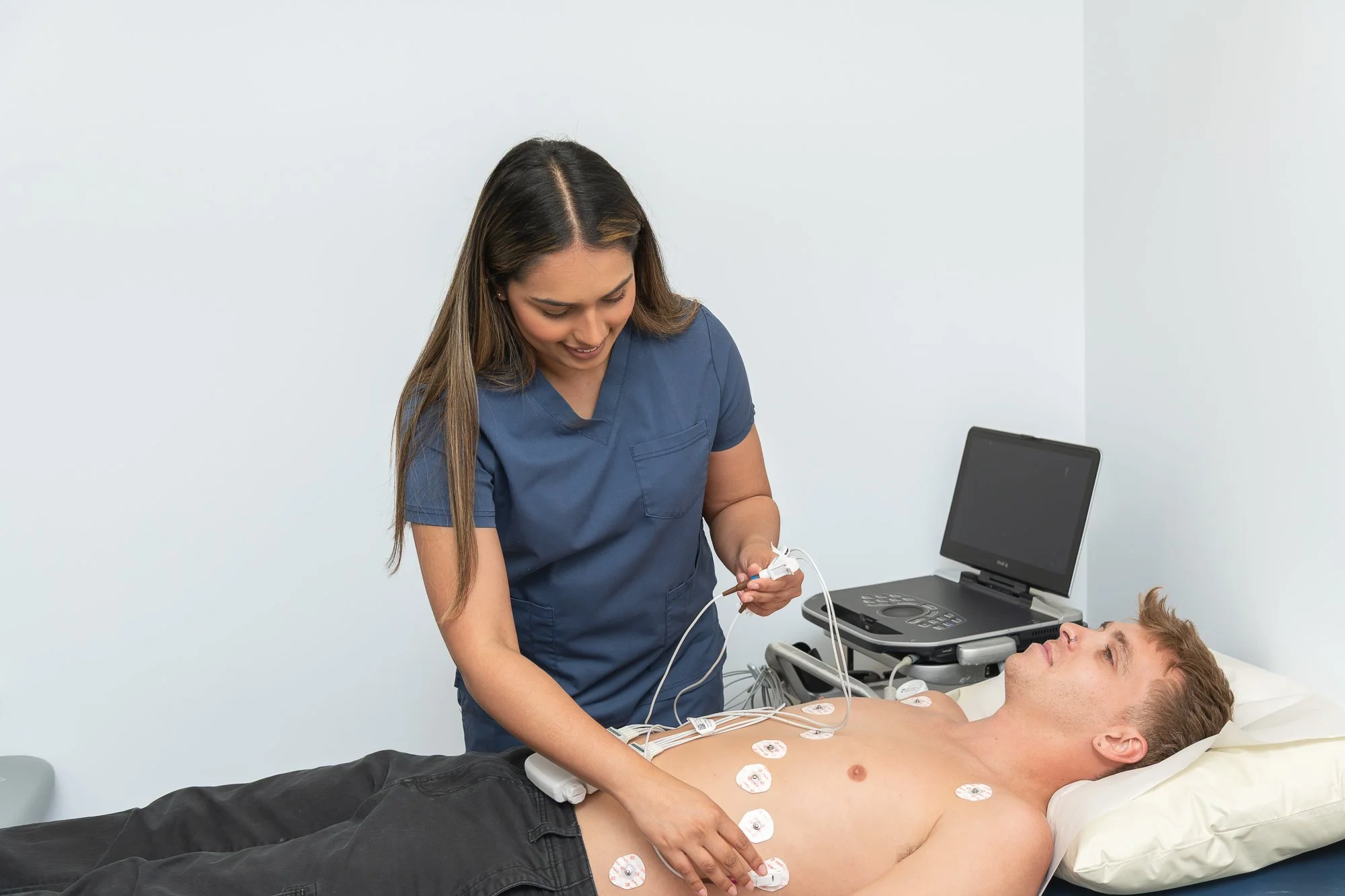
ECG (Electrocardiogram) Heart Rhythm Test in Melbourne & Gippsland
An electrocardiogram (ECG) is a fundamental, non-invasive tool used to identify the cause of heart-related symptoms. At Melbourne Cardiology Group, we provide fast and accurate ECG testing at our clinics in Vermont South, Malvern, and Leongatha to monitor your heart’s electrical health.
-
An ECG (also known as an EKG) is a safe medical test that records the electrical signals generated by your heart. Using a machine called an electrocardiograph, we attach small sticky sensors (electrodes) to your chest and limbs. These sensors "listen" to your heart’s activity, displaying it as waves for our cardiologists to analyse.
-
A doctor or specialist may refer you for an ECG test to:
Identify the cause of chest pain: Determining if discomfort is heart related.
Evaluate symptoms: Investigating shortness of breath, dizziness, fainting, or extreme fatigue.
Detect Heart Rhythm Issues: Identifying irregular heartbeats, palpitations, or arrhythmias.
Monitor Heart Health: Checking for cardiac abnormalities or assessing the heart before surgery.
-
An ECG is a quick and efficient process, usually taking only 5 to 10 minutes:
During Consultation: At Melbourne Cardiology Group, an ECG is typically performed as part of your cardiac consultation.
Standalone Testing: If your doctor has ordered an ECG alone, we can book a convenient time with our clinical staff.
Immediate Results: Your cardiologist will often review the report on-the-spot, and a copy will be sent to your GP.
-
Referral: Ensure you have a valid GP referral to claim your Medicare rebate.
Clothing: Wear a two-piece outfit (like a shirt and trousers) for easy access to your chest and limbs.
Skin Care: Avoid body lotions, oils, or powders on your chest, as these prevent the electrodes from sticking.
Medication: No fasting is required; continue taking all usual medications.
-
We offer comprehensive ECG services at our Malvern and Vermont South clinics. Testing can be performed as part of your standard specialist consultation or ordered independently by your referring doctor. For our patients in Gippsland an ECG test will be conducted during your cardiology consultation.
-
There is a fee for an ECG (MBS item 11714). If you have a valid referral, you will be eligible for a Medicare rebate to help cover the cost. Our team will confirm the exact fee at the time of booking.
-
An ECG is an excellent "snapshot." However, because it only records for 30 seconds, your doctor may recommend a Holter Monitor (24-hour recording) or a Stress Echo if they need to see how your heart behaves over a longer period or under stress.
-
An ECG is completely painless. It does not send electricity into your body; it only records your heart's natural signals. It is safe for all ages.
Book ECG testing
ECG testing at our clinics in Vermont South, Malvern, and Leongatha to monitor your heart’s electrical health. Contact your preferred clinic directly to book.