

Our Services → Tilt Table Test
Tilt Table Test
Tilt Table Test for Fainting & POTS Diagnosis in Melbourne
A Tilt Table Test (TTT) is a specialised diagnostic tool used to evaluate the cause of unexplained fainting, blackouts, or dizziness. Melbourne Cardiology Group offers expert Tilt Table testing at our Malvern clinic, led by A/Prof Gautam Vaddadi, a renowned specialist in autonomic disorders and syncope.
-
Your doctor may recommend this test if you experience repeated episodes of light-headedness or fainting that other tests (like a standard ECG) haven't explained. Key reasons include:
Investigating Syncope (Fainting): Identifying why you lose consciousness unexpectedly.
Diagnosing POTS: Confirming Postural Orthostatic Tachycardia Syndrome if your heart rate spikes when standing.
Identifying Orthostatic Hypotension: Checking for a sudden drop in blood pressure upon standing.
Distinguishing Seizures from Fainting: Determining if "blackouts" are cardiovascular or neurological.
Injury Prevention: Finding a treatment plan for fainting episodes that lead to falls or injuries.
-
The test is designed to safely trigger your symptoms—such as dizziness or fainting—in a controlled environment. By monitoring your heart rate and blood pressure while the table moves, we can observe how your nervous system responds to gravity and determines if there is an incorrect drop in blood flow to the brain.
-
Mandatory Support Person: You must have a companion to drive you home. Because the test induces fainting symptoms, it is not safe for you to drive, use public transport, or take a taxi alone.
Fasting: Do not eat or drink for 2 hours prior to the test (small sips of water are okay).
Medications: Cease Beta-blockers for 48 hours before the test. Please check with our clinic if you take ADHD stimulants, as these may also need to be paused.
Referral: A valid GP referral is required to claim your Medicare rebate.
Clothing: Wear comfortable, loose-fitting two-piece clothing. Allow 1 hour for the total appointment time.
-
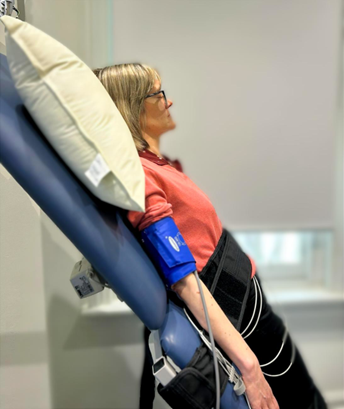
Setup: You will lie flat on a motorised table with safety straps and a footboard. We will apply ECG electrodes and a blood pressure cuff.
The Tilt: After 5 minutes of resting flat, the table tilts to a nearly vertical position for 5 to 45 minutes.
Monitoring: You must remain still and report any sweating, nausea, or light-headedness immediately.
GTN Spray: If symptoms don't occur after 20 minutes, a small spray of GTN may be used under your tongue to help prompt the fainting reflex for further monitoring.
-
Positive Result: A significant drop in blood pressure or a heart rate spike accompanied by dizziness confirms a diagnosis like Vasovagal Syncope or POTS.
Negative Result: Your heart rate and blood pressure remain stable, suggesting the cause of your symptoms may lie elsewhere.
Follow-up: A/Prof Gautam Vaddadi will provide a detailed report and management plan to your referring doctor.
-
No, the test is not painful. The goal is simply to reproduce the dizzy sensations you have been feeling in a safe environment where you are supported by straps and medical staff.
-
If you faint, the table is immediately returned to a horizontal position. Most patients regain consciousness within seconds. You will be under the expert supervision of A/Prof Gautam Vaddadi throughout your recovery.
-
The TTT is a powerful tool for diagnosing POTS and dysautonomia. If your symptoms are intermittent, your specialist may combine these results with other diagnostic testing for a comprehensive assessment.
-
Following the fainting reflex, your body may feel weak or nauseous for several hours. Our safety protocol requires a known support person to ensure you arrive home safely and are monitored during your initial recovery.


Book a tilt table test with A/Prof Gautam Vaddadi at our Malvern clinic.
Questions?
call us on 03 9964 4848